Overview
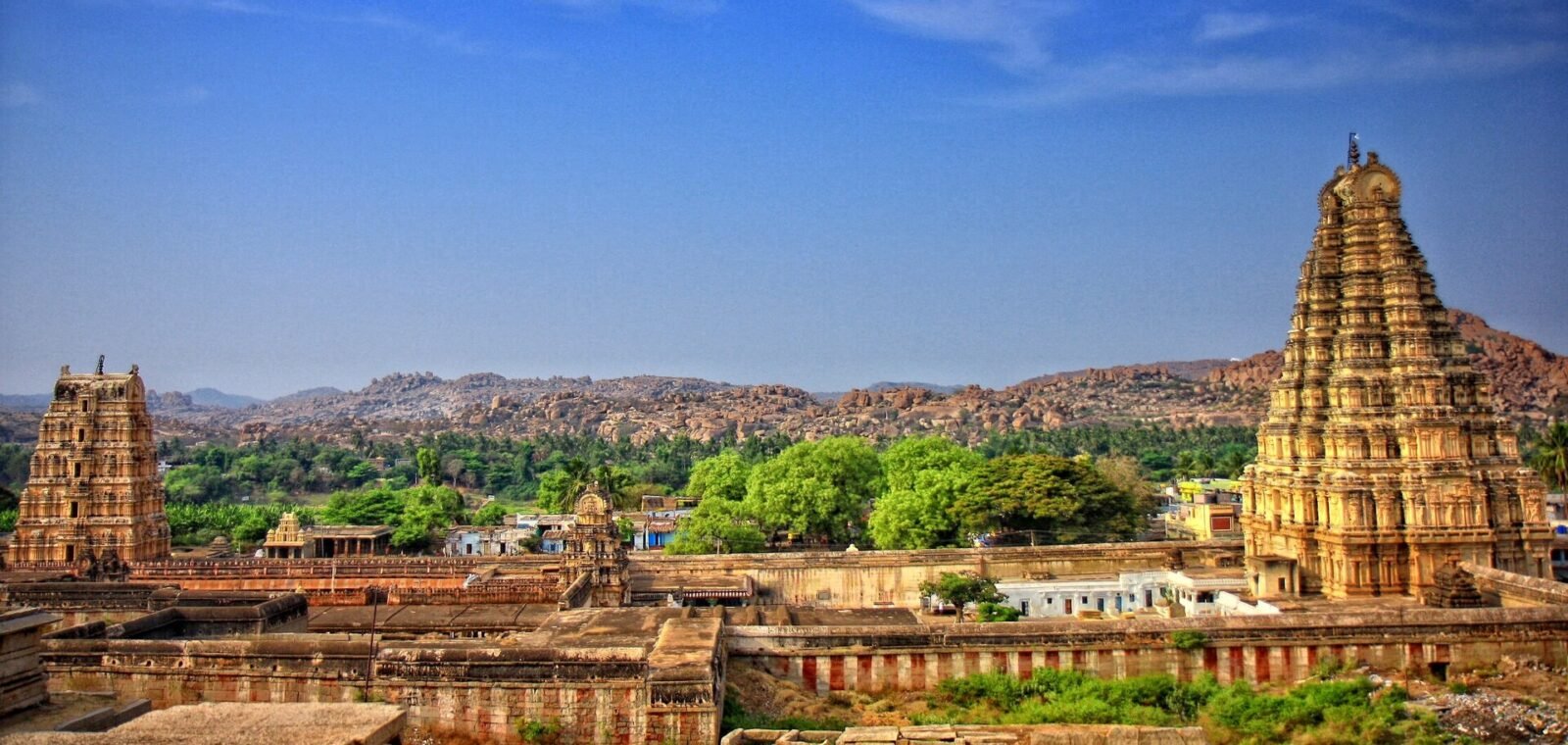
A surreal landscape of boulders, temples and ruins from the Vijayanagara Empire.
Hampi is an extensive archaeological and cultural landscape in Karnataka, where the monumental remains of Vijayanagara are set among granite boulders, cultivated fields and the Tungabhadra River. It cannot be understood as a single temple or compact ruin. Sacred quarters, royal enclosures, water systems, market streets and defensive features spread across a large area, making the natural setting part of the city’s design and identity.
Vijayanagara became the capital of a powerful South Indian empire from the fourteenth century. Over roughly two centuries, rulers and communities developed major temples, ceremonial spaces, bazaars and sophisticated infrastructure. The city declined after the sixteenth-century Battle of Talikota, but active worship continued at important sacred places. Hampi therefore combines archaeological remains with living religious traditions rather than functioning only as an abandoned city.
Highlights include the Virupaksha Temple precinct, the Vittala complex and its celebrated stone chariot, the royal centre, stepped water structures, elephant stables and riverside monuments. Architectural details reveal both Dravidian temple traditions and influences visible in secular buildings. Distances between zones are substantial, and the boulder landscape makes sunrise and sunset viewpoints memorable, though exposed terrain can become very hot.
Hampi suits heritage travellers, photographers, walkers and visitors willing to spend at least two days. Cycles, local transport and guides can make the dispersed site easier to understand. Modest behaviour is required at active temples, and visitors should respect protected areas, avoid climbing monuments and carry water. Current ticketing, access routes and transport arrangements should be confirmed through official sources.
The destination pairs naturally with Hospet as a transport base and with nearby villages for accommodation, but rushing the principal monuments into a few hours reduces the experience. What makes Hampi exceptional is the way planned imperial architecture sits within a dramatic geological and sacred landscape. Time spent moving between major structures and quieter riverfront remains is as valuable as visiting the famous icons.