Overview
UNESCO-listed Buddhist cave monuments celebrated for ancient murals and sculpture.
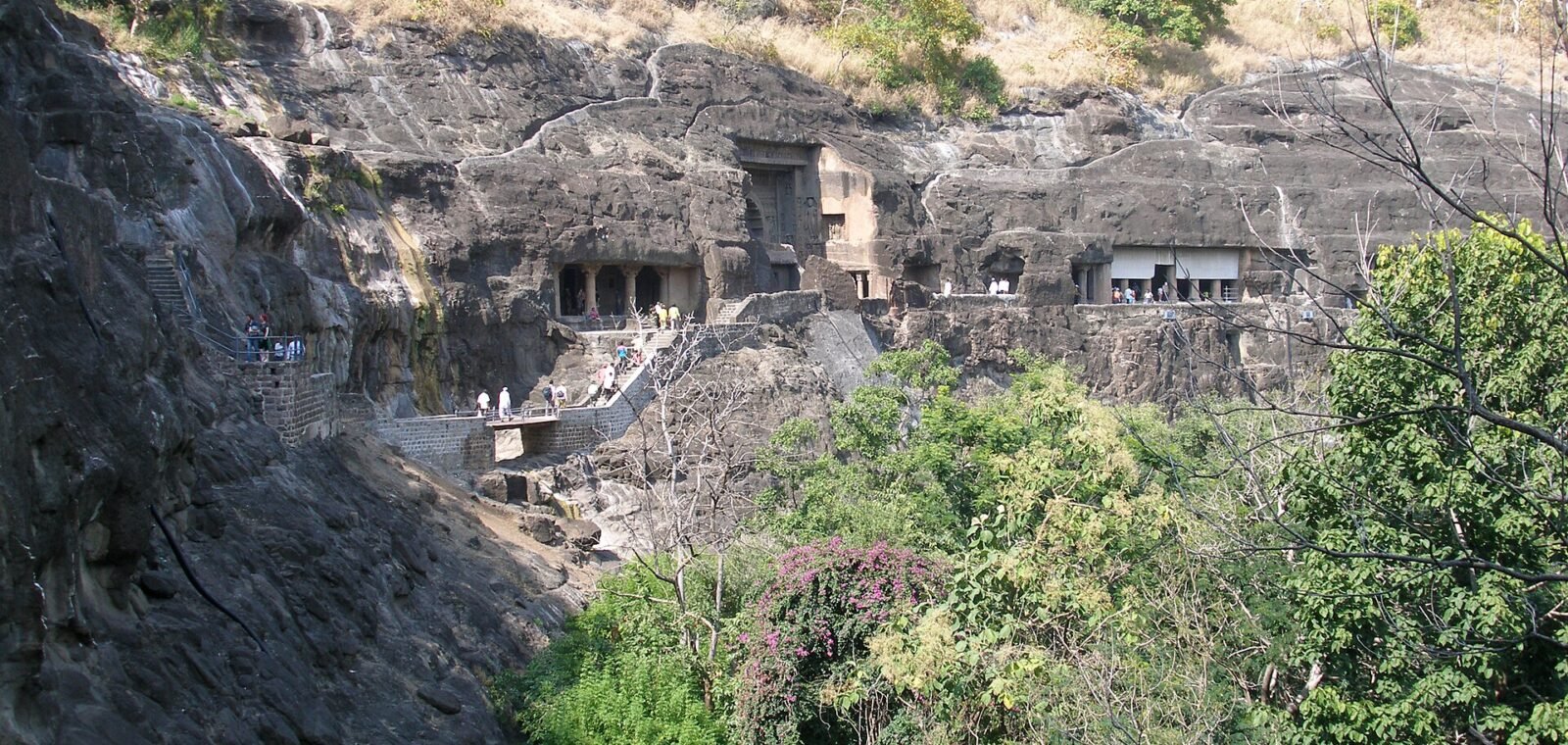
Ajanta Caves form a celebrated group of Buddhist rock-cut sanctuaries and monasteries carved into a horseshoe-shaped cliff above the Waghora valley in Maharashtra. The complex is internationally important for the relationship between architecture, sculpture and surviving wall paintings. Its setting is integral to the experience: a sequence of cave façades follows the curve of the ravine, allowing visitors to understand the ensemble before examining individual interiors.
Excavation occurred in two major phases. Early monuments date to around the second and first centuries BCE, while a later period of intense activity during the fifth and sixth centuries CE produced richly decorated monasteries and prayer halls. The caves reflect changing Buddhist practice, patronage and artistic language. They also preserve evidence of the planning and labour involved in cutting sophisticated spaces directly from basalt.
Inside, pillars, shrines, stupas and sculpted façades are joined by paintings depicting Buddhist narratives, devotional figures and aspects of courtly life. Light levels are deliberately controlled because the paintings are fragile, and photography or movement may be restricted. The most rewarding visit is slow and selective: visual details can be difficult to absorb if every cave is rushed, while steps and uneven surfaces require sustained walking.
Ajanta suits travellers interested in art history, archaeology, Buddhism and ancient engineering. Families can appreciate the dramatic setting, but heat, queues and walking distances should be planned for. Visitors should respect barriers, avoid touching painted or carved surfaces and follow current conservation instructions. Official hours, the weekly closure, ticketing and shuttle arrangements must be checked before departure.
The caves deserve at least half a day and are commonly paired with Aurangabad as a base, though Ajanta and Ellora should not be compressed into a superficial single stop. What makes Ajanta remarkable is the survival of narrative painting within a complete monastic landscape. The combination of ravine, architecture and devotional art makes it one of India’s most important cultural destinations.