Overview
A dramatic hill fortress with sweeping Sahyadri views and a powerful Maratha history.
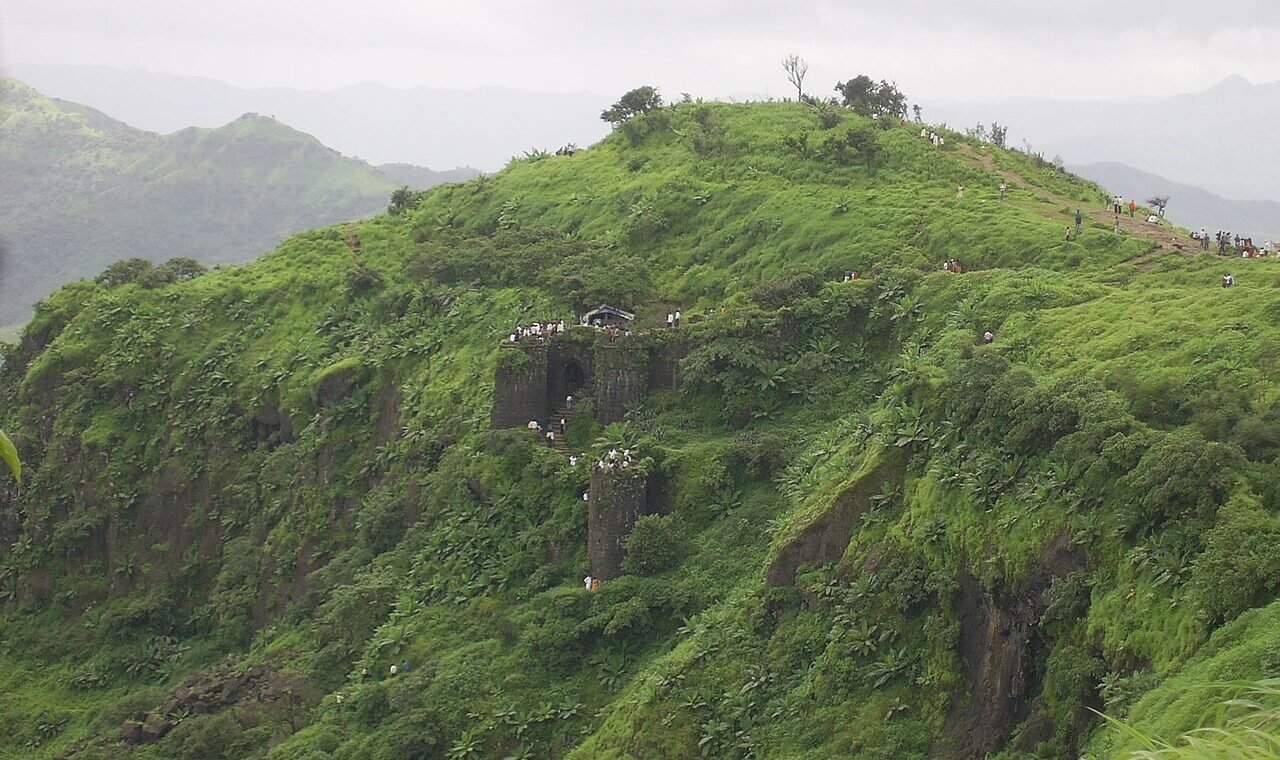
Sinhagad Fort rises above the Bhuleshwar range of the Sahyadris southwest of Pune, combining a significant Maratha stronghold with one of the region’s most accessible hill excursions. Formerly known as Kondhana, the fort occupies a steep-sided summit that explains its long strategic importance. Visitors come for the surviving gateways and fort remains, but the broad views across ridges, reservoirs and cultivated valleys are equally central to the experience.
The best-known chapter in Sinhagad’s history is the Maratha capture of the fort in 1670 under Tanaji Malusare, a commander of Chhatrapati Shivaji Maharaj. Tanaji died during the fighting and is commemorated at the site. The episode has become closely associated with Maharashtra’s memory of courage and sacrifice. Earlier and later powers also controlled the hill, so the ruins should be understood as part of a longer military landscape rather than as the product of a single battle.
Two historic entrances, Pune Darwaza and Kalyan Darwaza, lead into a plateau containing bastions, water-storage structures, memorials, temples and scattered building remains. Much of the attraction lies in walking between these features while observing how cliffs and controlled approaches strengthened the defences. Mist and green slopes make the monsoon visually dramatic, although wet rock and paths can be slippery. Clear winter mornings generally provide easier walking and wider views.
The fort suits walkers, families comfortable with uneven ground, photographers and travellers interested in Maratha history. Visitors may trek from the base or use the winding approach road when it is operating, but conditions and traffic controls should be checked locally. Small food stalls are known for simple Maharashtrian dishes, adding a local social character to the summit.
Sinhagad works well as a half-day trip from Pune and can be combined with Khadakwasla or a broader circuit of hill forts. It is worth visiting for the relationship between terrain, defence and living historical memory, not for a fully preserved palace complex. Early arrival, suitable footwear, drinking water and respect for exposed edges make the visit more rewarding.