Overview
A graceful landmark of India’s freedom movement set within landscaped gardens.
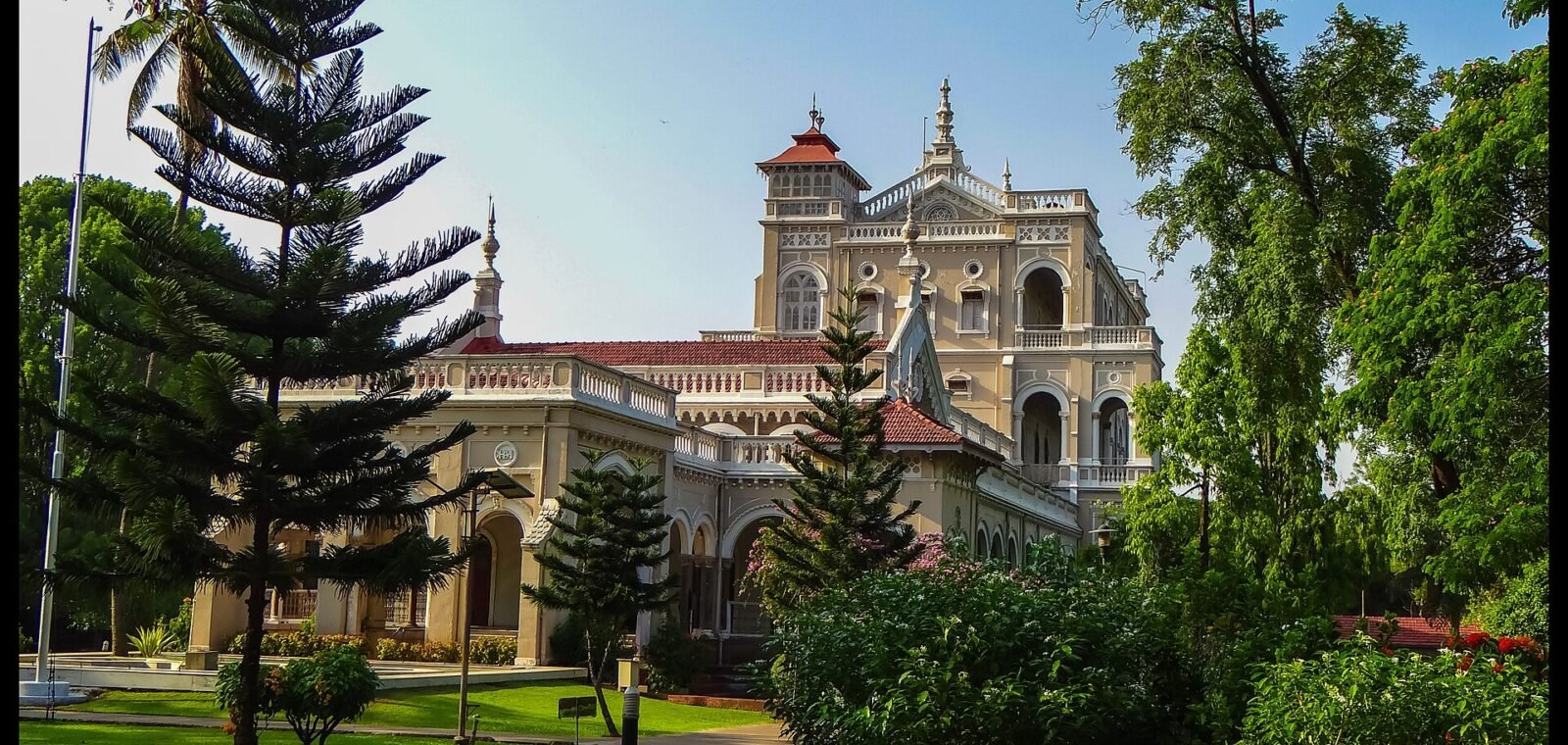
Aga Khan Palace is a spacious late nineteenth-century landmark in Pune whose graceful arcades and gardens are closely connected with India’s freedom movement. Built in 1892 by Sultan Muhammed Shah Aga Khan III, the palace presents a calmer, more reflective experience than the city’s military ruins. Its architectural scale, open verandas and landscaped grounds give visitors room to understand both the building and the difficult history remembered within it.
During the Quit India Movement, British authorities used the palace to intern Mahatma Gandhi, Kasturba Gandhi, Mahadev Desai and others from 1942. Kasturba Gandhi and Mahadev Desai died during the detention, and memorials within the grounds preserve their association with the site. This period gives the palace national importance beyond its original role and explains why the visit is centred on remembrance, archival interpretation and Gandhi’s life rather than royal display.
The building is distinguished by long Italianate arches, high rooms, broad corridors and repeated bands of balconies arranged around open space. Museum displays commonly include photographs, documents and personal objects connected with Gandhi and the independence movement. The gardens soften the formal architecture and create quiet viewpoints, although individual galleries or areas may close for conservation, official events or maintenance.
The palace is suitable for history students, families, architecture enthusiasts and travellers seeking an accessible cultural stop within Pune. A measured visit allows time to read the displays instead of treating the complex only as a photography location. Visitors should maintain a respectful tone around the memorials and verify current museum hours, ticketing, photography rules and gallery access through official channels before travelling.
Aga Khan Palace fits naturally into a Pune heritage itinerary with Shaniwar Wada and other museums, but its subject is distinct: it interprets the twentieth-century freedom struggle through a place of confinement and personal loss. Its value lies in the contrast between elegant surroundings and the serious events they witnessed, making it one of Pune’s most meaningful historical visits.